A few little things that might make bedtime feel easier.
Have you ever walked into a room you’ve known for years, only to find that suddenly, everything seems new or unfamiliar?
For someone living with dementia, that feeling can sometimes become part of everyday life. A room they’ve slept in for years may not feel quite as familiar anymore. Things they once knew by heart might become harder to recognize, and even simple things can sometimes feel confusing.
As much as we wish we could take that confusion away, we can’t always do that. But we can look at their surroundings through their eyes and do our best to make their space feel safe, comfortable, and familiar.
And sometimes, it’s the little things that can help.
So today, let’s talk about a few simple changes we can make in the bedroom that may help make everyday life a little easier for someone we love.
Disclosure: This post contains affiliate links. As an Amazon Associate, I earn from qualifying purchases. If you purchase through these links, I may earn a commission at no additional cost to you.
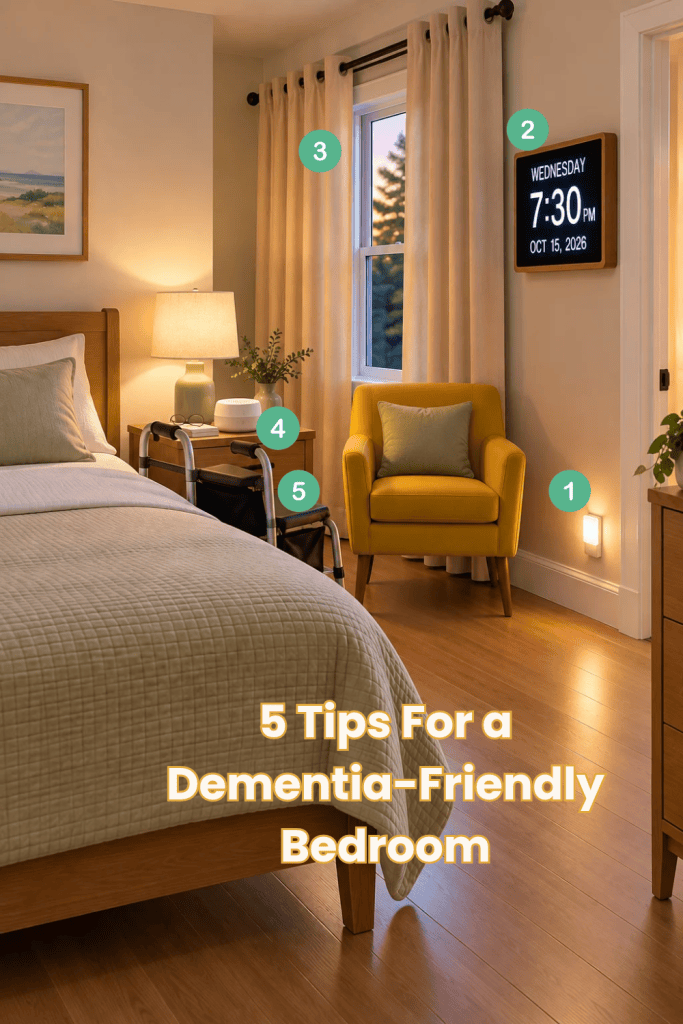
1. Leave a Little Light On
My dad has a little nighttime routine that happens like clockwork. Every night, before I turn off the lights, he asks me, “Can you please leave a light on?”
I tell him, “They’ll come on after I turn off the lights.”
You see, we have nightlights that come on automatically as soon as the room gets dark. That way, he isn’t left in complete darkness when the lights go out. I actually have a few in his room.
I can’t say that a nightlight takes away the confusion that can come with dementia. But I do think about how it might feel to wake up in the dark, unsure of what’s going on or what to do next. Having a little light to see by may help someone feel less frightened and make familiar things easier to see.
If your loved one seems uneasy when the lights go out, you might try a nightlight that switches on automatically.
If you’d like to see an example of this kind of nightlight, here’s one to take a look at.
It’s a small thing, but sometimes the little things are what help our loved ones feel a bit more comfortable. And if my dad’s nightly request has taught me anything, it’s that feeling safe matters.
2. Make the Time a Little Easier to See
Something I’ve noticed with my dad is how dementia can change a person’s sense of time. As it progresses, days and nights can sometimes seem to run together. It may become harder to know whether it’s morning or evening, or even what day it is.
We tend to take these little things for granted. We glance at our watch, check the time on our phone, or look at the calendar without giving it much thought. But for someone living with dementia, those familiar ways of keeping track of time may no longer be as easy. Reading a watch can become difficult, and changes in vision can make small numbers harder to see, too.
That’s why I like the idea of a large digital clock with clear numbers and, if it’s helpful, the day and date displayed as well. I’d place it somewhere easy to see from the bed, rather than tucked away on a dresser.
Of course, a clock won’t make every confusing moment disappear, and your loved one may not always be able to make sense of what it says. But it can offer a familiar visual reminder, and that’s worth considering.
As with so many things, it comes down to knowing your loved one and noticing what might make their day a little easier.
If you’d like to see an example of a clock with a large display , I’ve included a link here in case you would like total a look.
3. Make It Easy to Close the Curtains
One thing I’ve learned from caring for my dad is that as late afternoon approaches, his need to close the curtains becomes very important to him.
For someone living with dementia, the changing light and shadows at the end of the day can sometimes bring on feelings of fear or confusion. This is often referred to as sundowning. In my dad’s case, he becomes fearful of what’s outside and needs the curtains closed to feel safe.
He’s broken more than a few curtain rods trying to close them, so I’ve learned that something as simple as the way curtains open and close can make a real difference in our home.
If you’ve noticed something similar with your loved one, you might want to consider curtains that slide easily and a sturdy curtain rod that can handle everyday use. The goal isn’t to stop them from closing the curtains, but to make it easier and safer for them to do something that helps them feel secure.
If you’re looking for curtains that are easy to open and close, I recommend looking for ones with grommets. I’ve also included a link to a sturdy curtain rod that may be worth considering,
Sometimes, we have to look beyond the little things we see around the house and understand why they’re important to our loved ones. For my dad, closing the curtains isn’t just part of his evening routine. It’s about feeling safe.
4. Keep the Walker Close By
Getting out of bed is something most of us do without giving it much thought. But for someone who relies on a walker, those first few steps can take a little more planning.
If your loved one uses a walker, try keeping it beside the bed where it’s easy to see and reach before standing up. You don’t want them having to take a few steps on their own just to get to it.
There’s another little detail that’s especially important if your loved one uses a rollator walker with a seat: make sure the brakes are locked when it’s parked beside the bed. If the walker rolls away when your loved one reaches for it or tries to steady themselves, they could lose their balance and fall.
And here’s something else to think about: someone living with dementia may not remember to check the brakes before getting up. We can’t always count on them to recognize that the walker needs to be secure, either.
That’s why I think it’s helpful to make checking the walker part of our own bedtime routine. Before you turn in for the night, take a moment to make sure it’s within easy reach and the brakes are locked, so it’s ready for your loved one when they wake up and need it.
If your loved one uses the seat, make sure they’re following the manufacturer’s instructions for safely sitting down and getting back up.
It’s also helpful to look at the path from the bed to the bathroom. Is anything in the way? Is there enough light to see where they’re going, especially during the night?
We can’t plan for every little thing, of course. But taking a moment to look around the bedroom from our loved one’s point of view can help us spot things we might otherwise miss.
Sometimes, making a space safer isn’t about buying anything new. It’s about paying attention to the little details that can make everyday life easier and help our loved ones move around more safely.
5. Consider a White Noise Machine
Sometimes, it’s not something we can see that makes a bedroom feel uncomfortable. It’s what we hear.
A television in another room, cars passing outside, a dog barking, or even the occasional noise around the house can make it harder to settle down at night. For someone living with dementia, these sounds may sometimes be distracting or unsettling.
A white noise machine creates a steady background sound that may help soften some of those sudden noises. Some people find that a consistent sound helps them relax and settle down, while others may prefer a quiet room.
Every person is different, so I’d pay attention to how your loved one responds. If background noise seems to help them relax, a white noise machine might be worth trying at a comfortable volume. If it seems to bother them, there’s no need to keep using it.
The idea isn’t to fill the room with more noise. It’s simply to see whether a steady, familiar sound might make bedtime a little more comfortable.
As with the other changes we’ve talked about, let your loved one’s comfort guide you.
A Few Small Changes Can Make a Difference
When we’re caring for someone living with dementia, it’s easy to feel as though there’s always something else we should be doing. We want to keep our loved ones safe, help them feel comfortable, and make things a little easier for them.
But we don’t have to change everything at once.
Sometimes, it’s a nightlight that comes on automatically. Sometimes, it’s a clock that’s easier to read, curtains that close without a struggle, a walker that’s ready and secure beside the bed, or a quieter environment at bedtime.
None of these things can take away every challenge that comes with dementia. But they may help make the bedroom feel a little more familiar, comfortable, and easier to navigate.
And that’s really what we’re trying to do: look at the world through our loved one’s eyes and make small changes that support them in their everyday life.
Of course, we’re all different, and what works for one person might not work for another. I’m just sharing some ideas I’ve found helpful, and I hope you find something here that works for you and your loved one, too.
Take care of yourself, too.
A Note About Affiliate Links
This post contains affiliate links. If you make a purchase through one of these links, I may earn a commission at no extra cost to you.
As an Amazon Associate I earn from qualifying purchases.




Leave a Reply