Have you ever noticed that your loved one seems to be taking longer to get dressed in the morning? Maybe they’re standing in front of the closet for a while, looking through their clothes, or having trouble finding something they want to wear.
When someone is living with dementia, finding familiar things or deciding what to wear can sometimes become more difficult. And even when the clothes are right there, it may not be so easy to figure out where to look.
The good news is that a few small changes to the closet may help. Sometimes, making things easier to see, keeping favorite clothes within reach, or adding a few picture cues can make getting dressed a little less frustrating. Let’s talk about some simple things you might try.
This post contains affiliate links. If you make a purchase through one of these links, I may earn a commission at no extra cost to you.
As an Amazon Associate I earn from qualifying purchases.
Start With What’s Really Being Worn
You know, a good place to start is with the clothes your loved one reaches for most often. Are their favorite shirts easy to find, or are they tucked behind clothes they rarely wear? You might be able to move some out-of-season things elsewhere to make a little more room.
And don’t feel like you have to do it all at once. Maybe start with one small section of the closet and see how it goes. We’re not trying to get rid of someone’s belongings or decide what they should wear. We just want to make the clothes they know and love a little easier to find.
Make Everything Visible
Have you ever put something away and then had trouble remembering where you left it? It happens to all of us. But for someone living with dementia, finding things can sometimes become more difficult, especially when clothes and other belongings are tucked away in boxes or drawers that all look alike.
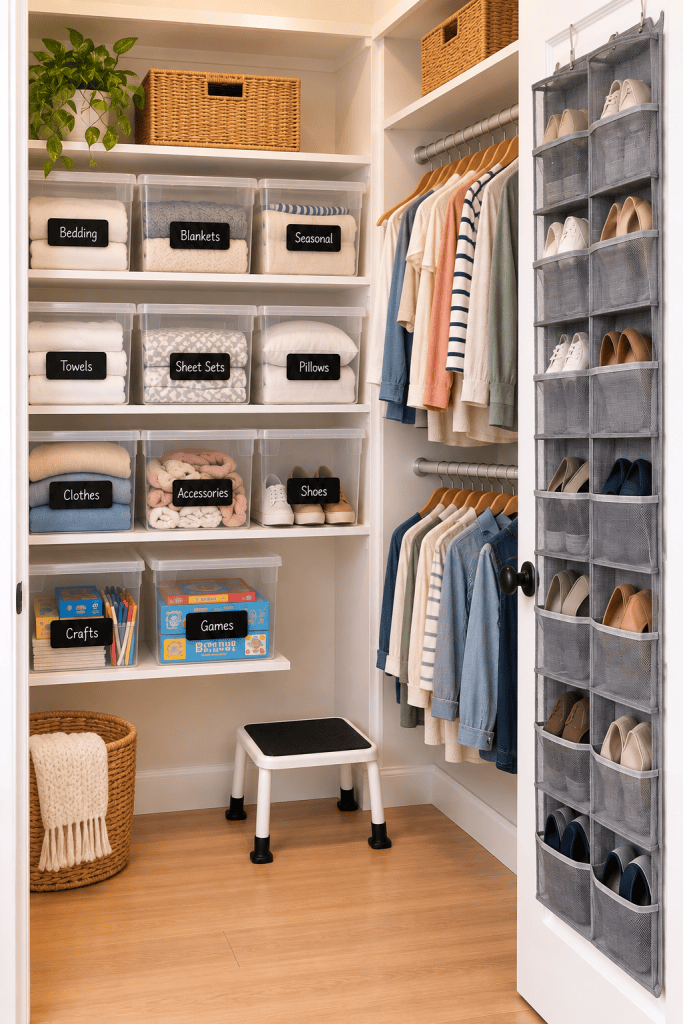
One thing you could try is making it easier to see what’s inside. Clear storage bins can be helpful, but pictures can be useful, too. For example, you could put a small picture of a shirt on the drawer or bin where shirts are kept, or a picture of socks where your loved one can easily see it. Sometimes, having that little visual reminder can help them recognize what they’re looking for without having to rely on memory alone.
You don’t have to label everything in the closet. Start with the things your loved one uses most often and see whether it helps. The idea is to make finding familiar things a little easier, while still letting them choose what they’d like to wear.
If you use storage bins for clothes or seasonal items, these clear adhesive label holders are another option. You can slide an index card inside with a simple description, such as “Winter Sweaters” or “Extra Blankets.” I like that you can change the card whenever you need to. And if your loved one would find a picture more helpful, you can always swap the written card for a picture—or use both. It’s nice to have the flexibility to adjust things as their needs change.
You can use plain white index cards with large, dark lettering to keep the labels simple and easy to read. You don’t need anything fancy; just a few cards for the things your loved one uses most often can be a good place to start.
Lower the Reach, Widen the Path
I started noticing that my parents weren’t always putting their clothes back where they belonged. Sometimes, I’d find things rolled up in a ball, and other times, clothes were tossed way up high in the closet. Honestly, I don’t even know how some of them got up there! Looking back, I realized there were a few things going on. My mom had physical limitations that made certain tasks harder, and with my dad, his dementia sometimes made it harder to remember where things belonged.
When you think about it, folding clothes, reaching up to a high shelf, or trying to put everything back in its proper place can take more effort than we realize. So why not make things a little easier where we can?
For everyday clothes, hanging them up can be a good option when it’s comfortable and practical. Shirts and pants are right there to see, without having to fold them neatly or dig through a drawer. Keeping those clothes at a comfortable height can also help avoid unnecessary stretching or reaching.
Of course, not every closet has room to hang everything, and what works for one person may not work for another. The idea is to find a setup that works for your loved one, makes their clothes easier to find, and helps them keep doing as much as they comfortably can for themselves.
I also think about closets that were set up for a different stage of life. Maybe you have one long rod meant for dresses and longer clothes, but now you need more room for shirts and pants. Or perhaps you’re moving into a smaller place and trying to make the closet work with less space.
One option worth looking at is an adjustable hanging rod that adds a second level beneath the existing one. It can give shorter clothes their own space without having to redesign the whole closet. Just make sure there’s enough room for the clothes to hang freely and that the lower rod is at a comfortable height for the person using it.
And then there’s the shoes! I know how easily they can end up scattered around the closet, especially when bending down to put them away isn’t easy anymore. One option worth considering is an over-the-door shoe organizer. It uses the back of the door to keep shoes together and off the floor, without taking up precious closet space. You can keep the shoes your loved one wears most often in the lower pockets, where they’re easier to reach. Just make sure the organizer fits your door and that the door can open and close freely.
Keep the Choices Simple
I’ve noticed that sometimes, having too many things to choose from can make a simple task feel harder than it needs to be. When someone is living with dementia, looking through a closet full of clothes can sometimes become overwhelming, especially when they’re trying to decide what to wear.
You could try keeping a few of their favorite outfits together and easy to see. Choose clothes they enjoy wearing and that are comfortable for them. The rest can stay in the closet or be stored elsewhere until they’re needed.
And of course, we still want our loved ones to have a say in what they wear. This isn’t about deciding for them. It’s about making it a little easier to see their options and choose something they feel good in. Sometimes, a small change like this can help keep getting dressed a familiar part of their day.
Light It Well
Something else worth looking at is the lighting inside the closet. As we get older, it can become harder to see things clearly, especially in a dimly lit space. And when someone is living with dementia, having trouble making out their clothes or telling similar items apart can add to the frustration of getting dressed.
You might find that adding a little light inside the closet helps. A battery-powered motion-sensor light is one option to consider, especially if wiring isn’t practical. Just make sure it provides enough light for the space and is positioned where it won’t cause glare.
Sometimes, it’s not about making big changes. It’s about noticing what might be making an everyday task harder and seeing if there’s a simple way to help.
Let’s Take It One Step at a Time
You know, when you’re trying to make things a little easier for someone you love, it’s easy to look around the house and see a hundred things you could change. I’ve been there. But you don’t have to do it all at once. Maybe you start with a few shirts that are easier to find, or find a better spot for the shoes. Just take it one thing at a time and see what works for your loved one.
And if you’ve found something that works in your home, I’d really love to hear about it. We’re all figuring things out as we go, and sometimes the simplest ideas are the ones that help the most. You never know when something you’ve tried might give another caregiver an idea they hadn’t thought of.
That’s really what I hope we can do here at Gentle Spaces—share ideas, learn from each other, and find little ways to make everyday life easier for the people we love. You don’t need a perfect home or a perfect plan. Sometimes, it’s just about making one small change and seeing where it takes you.
I’m glad you’re here.
This post contains affiliate links. See my disclosure page for the honest details.



Leave a Reply