
Let’s talk about the bathroom for a minute.
If you’re helping a parent or loved one at home, you may have started noticing little things that weren’t a concern before. Getting in and out of the shower, reaching for a towel, or feeling steady on a wet floor can become more challenging as needs change.
The good news is that you don’t necessarily need a complete bathroom makeover to make things easier. Sometimes, a few thoughtful changes can help.
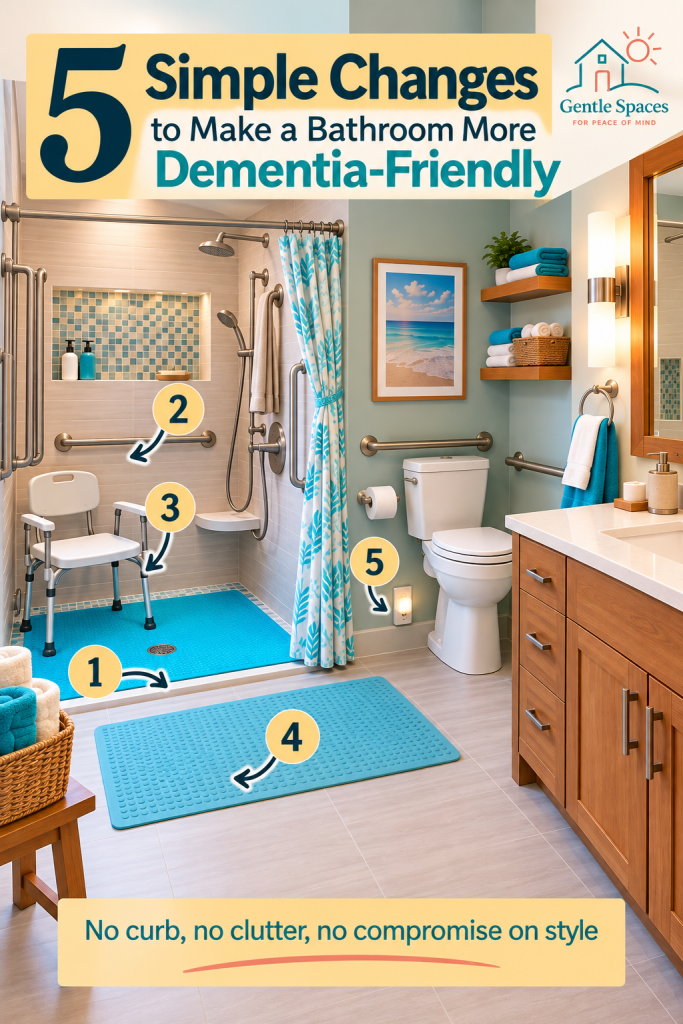
Here are five ideas to consider if you’re making a bathroom more comfortable and easier to navigate for someone living with dementia or adjusting to changes in mobility.
This post contains affiliate links. If you make a purchase through one of these links, I may earn a commission at no extra cost to you.
1. Make Getting Into the Shower Easier
If stepping over the edge of the tub or shower is becoming difficult, this may be a good place to start. A curbless shower can make getting in and out easier, especially for someone using a mobility aid.
A full bathroom renovation isn’t always possible, though. Depending on the existing shower and the person’s needs, a properly installed threshold ramp may be another option to explore. Just make sure it’s suitable for the space and doesn’t create a new tripping or slipping concern.
If a full reno isn’t in the cards right now, this rubber threshold ramp tapes over an existing curb and may be worth looking into. Just make sure it’s a good fit for your shower and stays securely in place.
2. Add Grab Bars Where They’re Needed Most
Grab bars don’t have to look institutional. Today, you can find options in finishes that coordinate with bathroom fixtures, so they can blend into the room more naturally.
Think about where a little extra support might be helpful, such as near the shower or toilet. Placement matters, and a towel rack isn’t a substitute for a grab bar. When choosing a grab bar, make sure it’s designed to support someone’s weight and is installed securely. It’s one of those things you want to feel confident relying on.
I like that this 24-inch brushed nickel grab bar has a finish that blends in with the other bathroom fixtures. It’s a nice way to add a little extra support without making the bathroom look too clinical.
3. Make Showering More Comfortable
Standing in the shower for several minutes can be tiring, especially if someone is dealing with changes in balance, strength, or mobility. A shower chair or bench provides a place to sit, making showering more comfortable and allowing someone to take their time.
I’ve found that a shower chair with a high back can offer extra support. Armrests can also be helpful when sitting down or getting back up.
I like that this height-adjustable shower chair with padded armrests and backrest adds extra comfort and support while showering.
4. Choose a Shower Mat That’s Easy to See
Here’s a little thing that can make a difference: color! Have you ever looked at a white shower mat sitting in a white tub? It’s not always easy to tell where the mat ends and the tub begins.
A bright teal or turquoise mat can stand out much better against a white tub, making it easier to see. It’s a simple change, but sometimes those little details are worth thinking about.
You’ll still want one that’s made for use in the tub or shower and stays securely in place. We want it to be easier to see, but just as important, safe to use.
This turquoise non-slip bath mat has suction cups and drain holes to help it stay in place, and I love how the bright color stands out against a white tub or tile.
5. Make Sure the Bathroom Is Easy to See at Night
I’ve noticed that it’s often the little things around the house that we don’t think about until a need comes up. For an older adult, getting up in the middle of the night to use the bathroom can be a little more challenging when the hallway is dark.
How about trying a motion-sensor nightlight? It comes on as someone walks by, so there’s no need to search for a light switch in the middle of the night. It’s a simple idea that may make those nighttime trips a little easier.
This warm-white motion-sensor night light comes as a two-pack, and plugs right into the wall. You can put one in the hallway and one in the bathroom itself.
Of course, we’re all different, and what works for one person might not work for another. I’m just sharing some ideas I’ve found helpful, and I hope you find something here that works for you and your loved one, too.
I know figuring out what might help at home isn’t always easy. Sometimes, even one small change can make everyday life a little easier for both of you. I hope this gave you a few ideas to consider.
This post contains affiliate links. See my disclosure page for the honest details.


Leave a Reply